 JAX PRESSURE PRO
Paver Cleaning in St. Augustine, FL
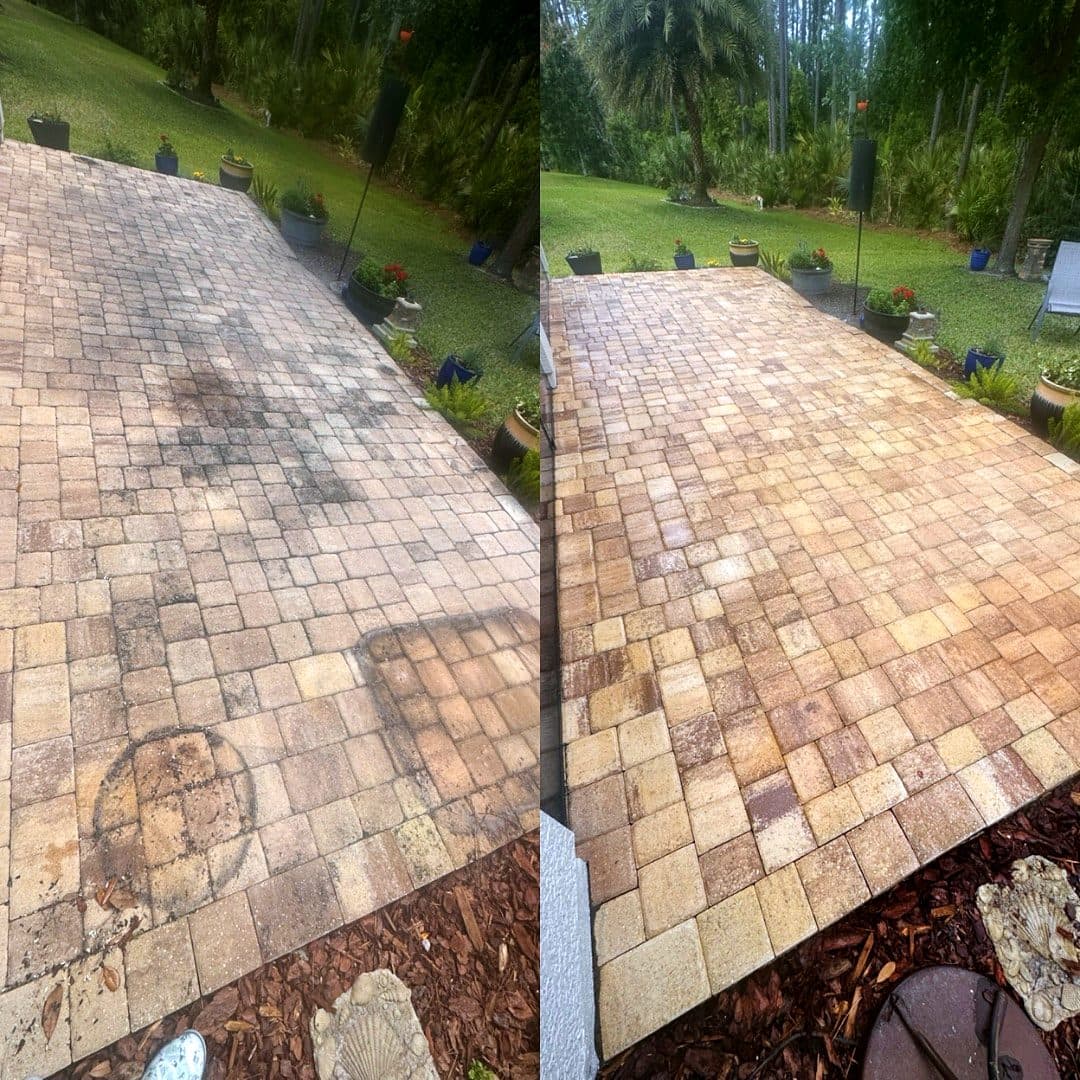
Paver cleaning in St. Augustine, FL is more than knocking the green off the top. Jordan clears the algae, mildew and weeds out of the pavers and the joints, treats oil and rust stains, and refills the joints with joint sand where the cleaning pulled old sand out, so the pavers look right and stay locked together. Brick or concrete pavers, driveways, patios and walkways. Text a few photos and most quotes come back without a site visit.
- Surface cleaner on the field
- Joint sand back in, not play sand
- Free quotes from photos
- 5.0 on Google, 65 reviews
Updated
5.065 Google reviews
Read all 65 on Google (opens in a new tab)Jordan with Jax Pressure Pro was great. He was there when he said he would be. We had a huge oil stain on our paver patio that had been there for a good while. To my amazement, Jordan was able to get the stain up and he did a great job cleaning our patio. I highly recommend him.
David Butler · Google review · May 2026 Jordan did a fantastic job! Great price and my driveway and patio look amazing! Will definitely be using again.
Kayla Wells · Google review · June 2026 ⭐️⭐️⭐️⭐️⭐️ 10/10 — Highly Recommend Jax Pressure Pro! Absolutely outstanding experience from start to finish. Jax Pressure Pro transformed my home — the house, driveway, pool pavers, and fence all look brand new. The level of detail and quality of work truly exceeded my expectations. Jordan was incredibly responsive, professional, and easy to work with throughout the entire process. Pricing was more than fair for the quality delivered, and you can tell they take pride in what they do. If you’re looking for reliable, high-quality pressure washing, this is the company to call. No hesitation — I would use them again and recommend them to anyone!
Jeannie Ramirez · Google review · May 2026
What a paver cleaning includes
Brick & paver cleaning covers driveways, patios, walkways and the pavers around a pool. Here's what goes into it.
- Spot treatment for oil, rust, algae and mildew before the main clean
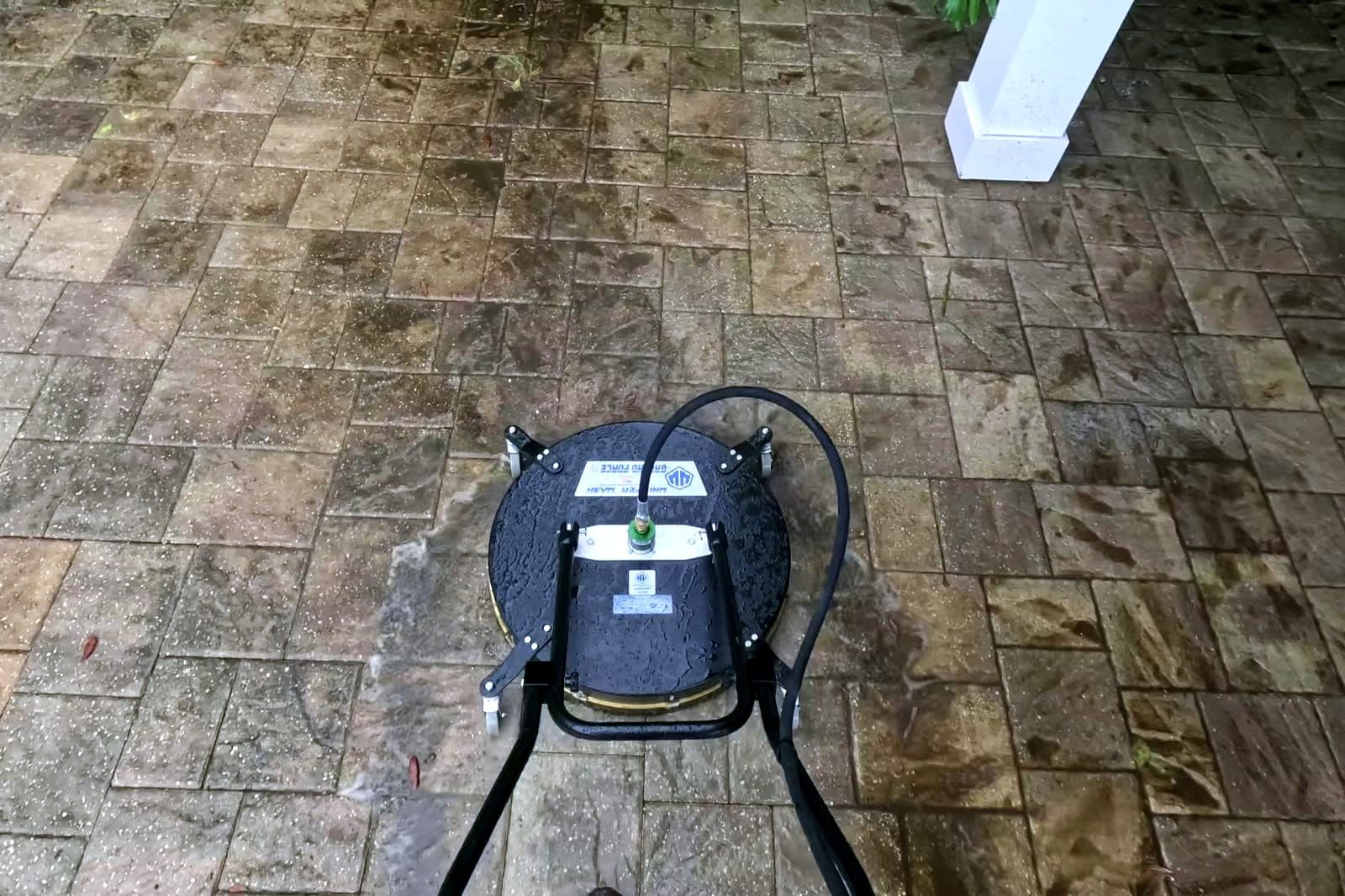
- Surface cleaner across the whole field of pavers for an even finish
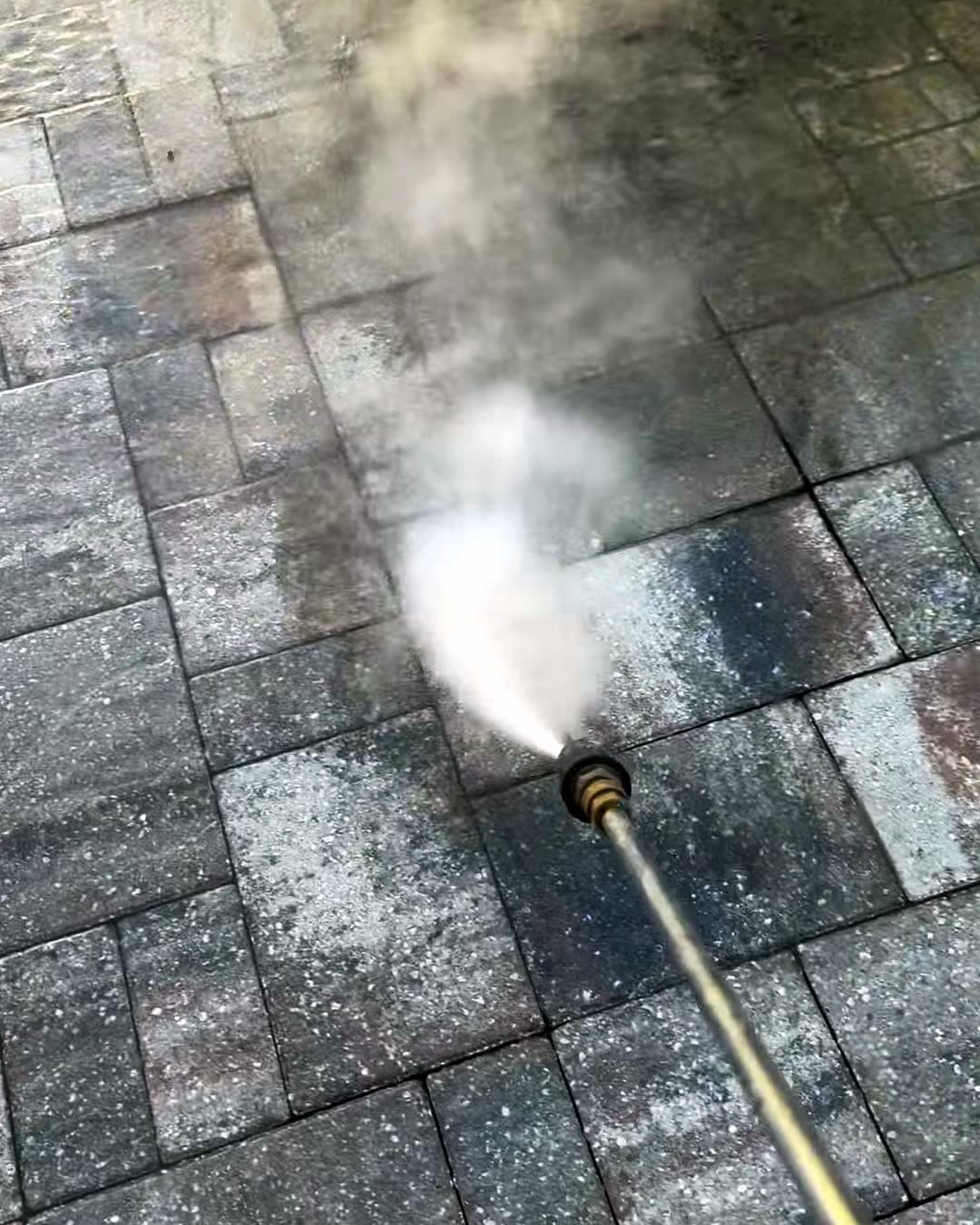
- Turbo nozzle detail work on stubborn spots, borders and steps
- Dirt and weeds cleared out of the joints
- Joint sand swept back in where the cleaning pulled old sand out
- A full rinse, plus before and after photos of your pavers
Why pavers go dark here
Pavers hold onto moisture, and the joints hold onto it longest. Afternoon storms, morning sprinklers and shade keep them damp, and that's where algae, mildew and weeds start. Shaded walkways and the north side of a patio usually go first, then the green spreads across the face of every paver.
Sun works on them from the other direction. Concrete pavers fade as the surface wears, so an old patio can look dark in the joints and washed out on top at the same time. Cleaning brings the color back. Keeping it is the job of paver sealing.
Oil, rust and stubborn stains
Not every stain comes up the same way. Oil soaks down into a paver, so it gets treated before the surface cleaner ever touches it. David Butler had a huge oil stain on his paver patio that had been there a good while, and Jordan got it up.
Orange rust spots are usually from sprinkler water or fertilizer granules left on the pavers. They're stains, not dirt, so pressure alone won't lift them. They need a treatment made for rust. Very old oil may lighten rather than disappear completely, and Jordan will tell you what to expect from a close-up photo before he starts, not after.
Why the joint sand matters after a cleaning
Getting pavers truly clean means getting into the joints, and that pulls out some of the sand that holds them in place. Leave the joints empty and the pavers can start to shift, weeds move back in faster and water finds its way under the edges.
So where the cleaning pulls sand out, the joints get refilled with joint sand, not the play sand most installs around here started with. Joint sand sets up once it's in place and stays put through the rain. If you plan to seal, it's the same step that comes right before the sealer goes down.
Brick pavers and concrete pavers
Both clean up well, but they don't age the same way. Clay brick pavers hold their color through the whole brick, so under years of gray film the red is usually still there, and cleaning is most of the job.
Concrete pavers wear at the surface as sun and traffic work on them, which is why a clean concrete paver driveway often looks best with a seal after. Either way, the cleaning comes first, and you'll know from your photos which one you have.
Clean now, seal later?
A cleaning on its own is the right call when you want the pavers looking good before guests, a listing or an HOA inspection. If you also want the color to last and the sand to stay put, sealing is the second half of the job, and the pavers need a day or two to dry before it goes on.
Pool surrounds and screen enclosures have their own page, pool deck cleaning, because the screens need a lighter touch than the pavers do.
What affects your price
Every job starts at $225, the minimum for any visit.
Every paver job is quoted on its own because no two are the same. These are the things that move the number:
The fastest way to a quote: text a wide photo of the area and a close-up of the joints to (904) 412-8080.
- Square footage, and how many separate areas (driveway, walkway, patio)
- How heavy the growth is, and how long since the last cleaning
- Oil, rust or other stains that need treatment
- How much joint sand needs to go back in
- Whether you want the pavers sealed after
- Access: furniture, planters, grills or cars to move
How paver cleaning works
Photos or a visit
Text photos of the pavers for a free quote, or have Jordan come look in person.
Treat the stains
Oil, rust and heavy growth get treated before the main clean.
Clean the field and joints
Surface cleaner across the pavers, turbo nozzle on the edges and stubborn spots, then a full rinse.
Re-sand and walk it
Joint sand goes back where it came out, and you get your before and after photos.
Watch a job
More jobs on YouTube @JaxPressurePro.
Paver Cleaning questions
Does pressure washing damage pavers?
Not when it's done right. Damage comes from a wand held too close, which can etch the surface and blast out the joints. A surface cleaner keeps the spray at a fixed height, and sand that comes out of the joints goes back in.
How often should pavers be cleaned in Florida?
Once a year suits most paver driveways and patios here. Shaded areas and pavers the sprinklers hit every day grow algae faster and may need it sooner. Sealed pavers stay clean longer between cleanings.
Why do weeds keep coming back between my pavers?
Usually because the joints lost their sand and filled with dirt instead, which gives weeds somewhere to root. Cleaning the joints out and refilling them with joint sand takes that away, and sealing locks the sand in.
What is the white haze on my pavers?
That's efflorescence, minerals that come up through the paver as moisture escapes. It's most common on newer pavers, and it gets cleaned off before any sealing so it isn't sealed in.
Can oil stains come out of pavers?
Often, or at least lighten a lot. Fresh oil lifts more easily than oil that has soaked in for years. Text a close-up photo and Jordan will tell you what to expect before he starts.
Do pavers need to be sealed after cleaning?
They don't have to be, but right after a cleaning is the best time. Sealing keeps the joint sand in place and slows fading, and it goes on once the pavers have dried for a day or two.
Get a free paver cleaning estimate
Text a few photos or fill out the form. Most quotes come back without a site visit.
Jax Pressure Pro LLC195 Manistique Ave, St. Augustine, FL 32092(904) 412-8080Open 24 hours. Calls and texts answered 24/7.Directions on Google MapsPrefer to talk? Call or text (904) 412-8080
Pick a time online