 JAX PRESSURE PRO
Paver Sealing in St. Augustine, FL
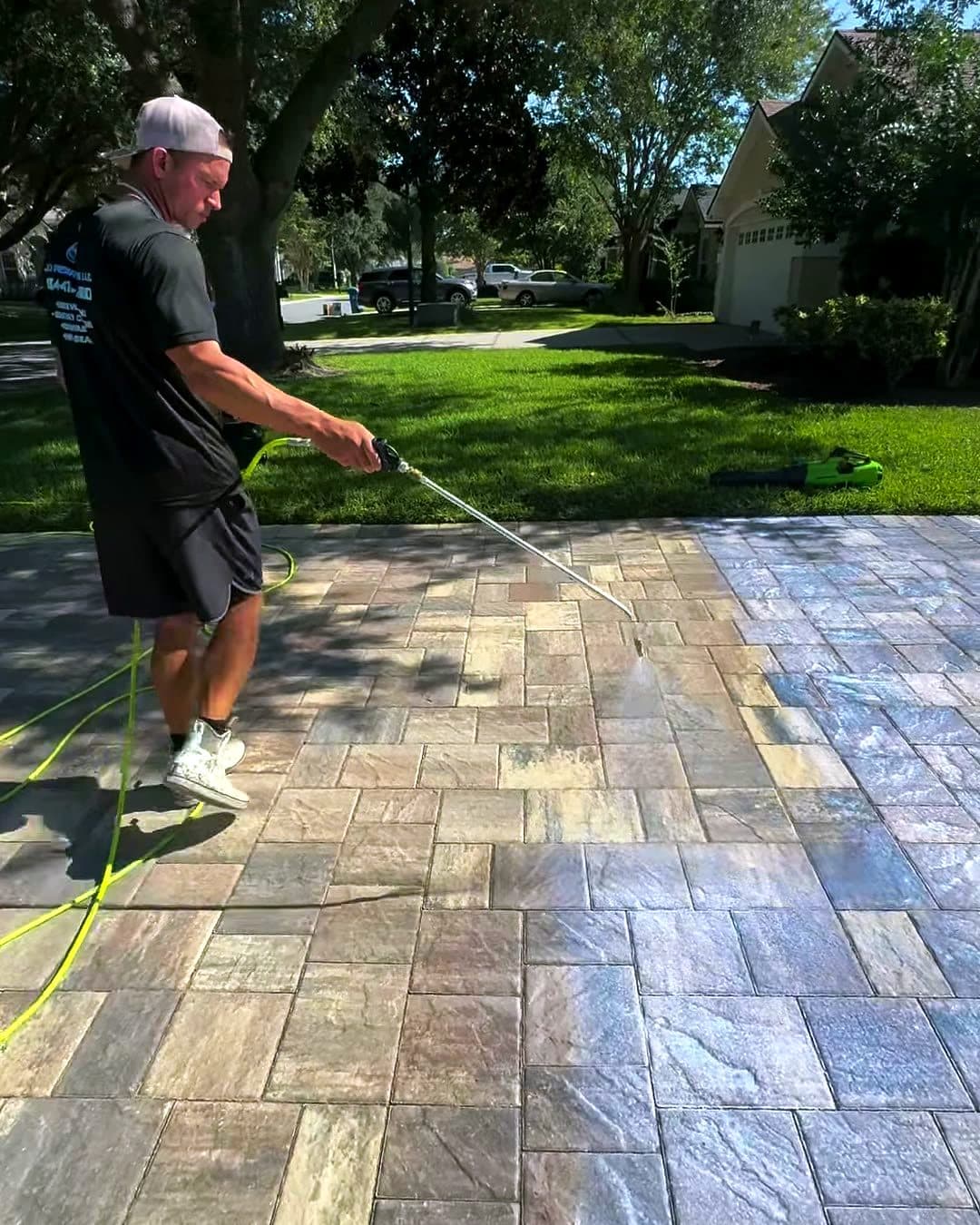
Paver sealing in St. Augustine, FL starts long before the sealer comes out. Jordan cleans your pavers, gives them time to dry, refills the joints with real joint sand and then seals every paver and joint, so the color comes back and the sand stays where it belongs. Driveways, patios, walkways and pool decks. Text a few photos and most quotes come back without a site visit.
- Joint sand, never play sand
- Free quotes from photos
- Law-enforcement owned
- 5.0 on Google, 65 reviews
Updated
5.065 Google reviews
Read all 65 on Google (opens in a new tab)⭐️⭐️⭐️⭐️⭐️ 10/10 — Highly Recommend Jax Pressure Pro! Absolutely outstanding experience from start to finish. Jax Pressure Pro transformed my home — the house, driveway, pool pavers, and fence all look brand new. The level of detail and quality of work truly exceeded my expectations. Jordan was incredibly responsive, professional, and easy to work with throughout the entire process. Pricing was more than fair for the quality delivered, and you can tell they take pride in what they do. If you’re looking for reliable, high-quality pressure washing, this is the company to call. No hesitation — I would use them again and recommend them to anyone!
Jeannie Ramirez · Google review · May 2026 Jordan with Jax Pressure Pro was great. He was there when he said he would be. We had a huge oil stain on our paver patio that had been there for a good while. To my amazement, Jordan was able to get the stain up and he did a great job cleaning our patio. I highly recommend him.
David Butler · Google review · May 2026 Jordan did a fantastic job! Great price and my driveway and patio look amazing! Will definitely be using again.
Kayla Wells · Google review · June 2026
What a paver seal includes
The sealer is the last 10 minutes of the job you see. The result depends on everything before it: how clean the pavers are, how dry they are and what's sitting in the joints.
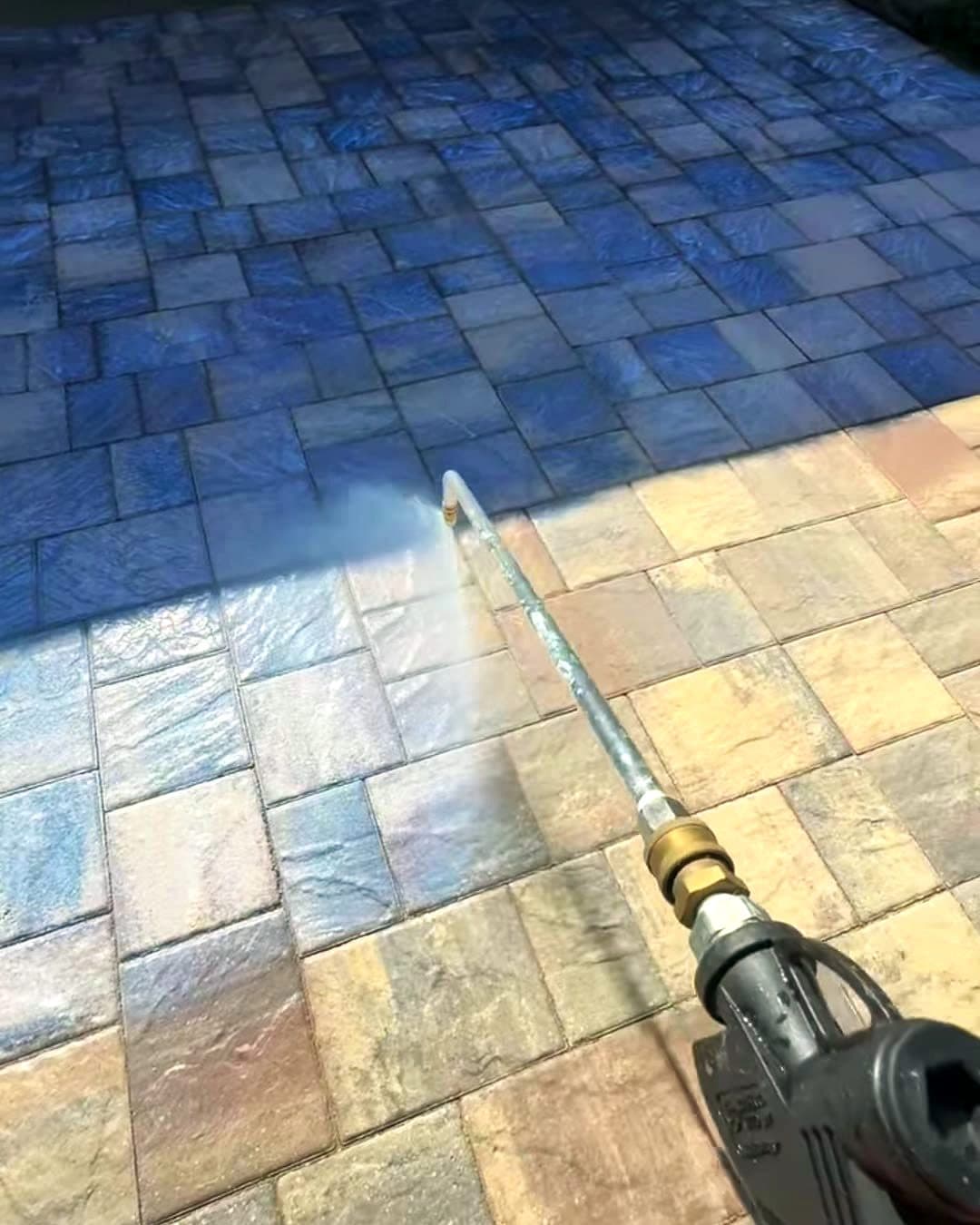
- Surface cleaning across the whole area, then a detail rinse along borders, steps and edges
- Spot treatment for oil, rust, mildew and algae in the joints
- Drying time, so the sealer bonds to the paver and not to trapped water
- Re-sanding every joint with joint sand
- Sealer applied across every paver and joint
- Before and after photos of your job
Joint sand vs. play sand
Most paver installs around here were filled with play sand because it's cheap. Play sand isn't made for pavers. Every afternoon storm and sprinkler cycle washes a little more out, and the gaps fill with dirt and then weeds. If your joints look sunken, dark or green, that's usually the reason. It isn't anything you did wrong.
Joint sand has a stabilizer in it that sets up once it's in place. It holds the pavers together, stops washout and gives weeds far less to root in. Re-sanding is part of every paver seal Jordan does, because sealer over half-empty joints doesn't last.
Why Northeast Florida pavers need sealing
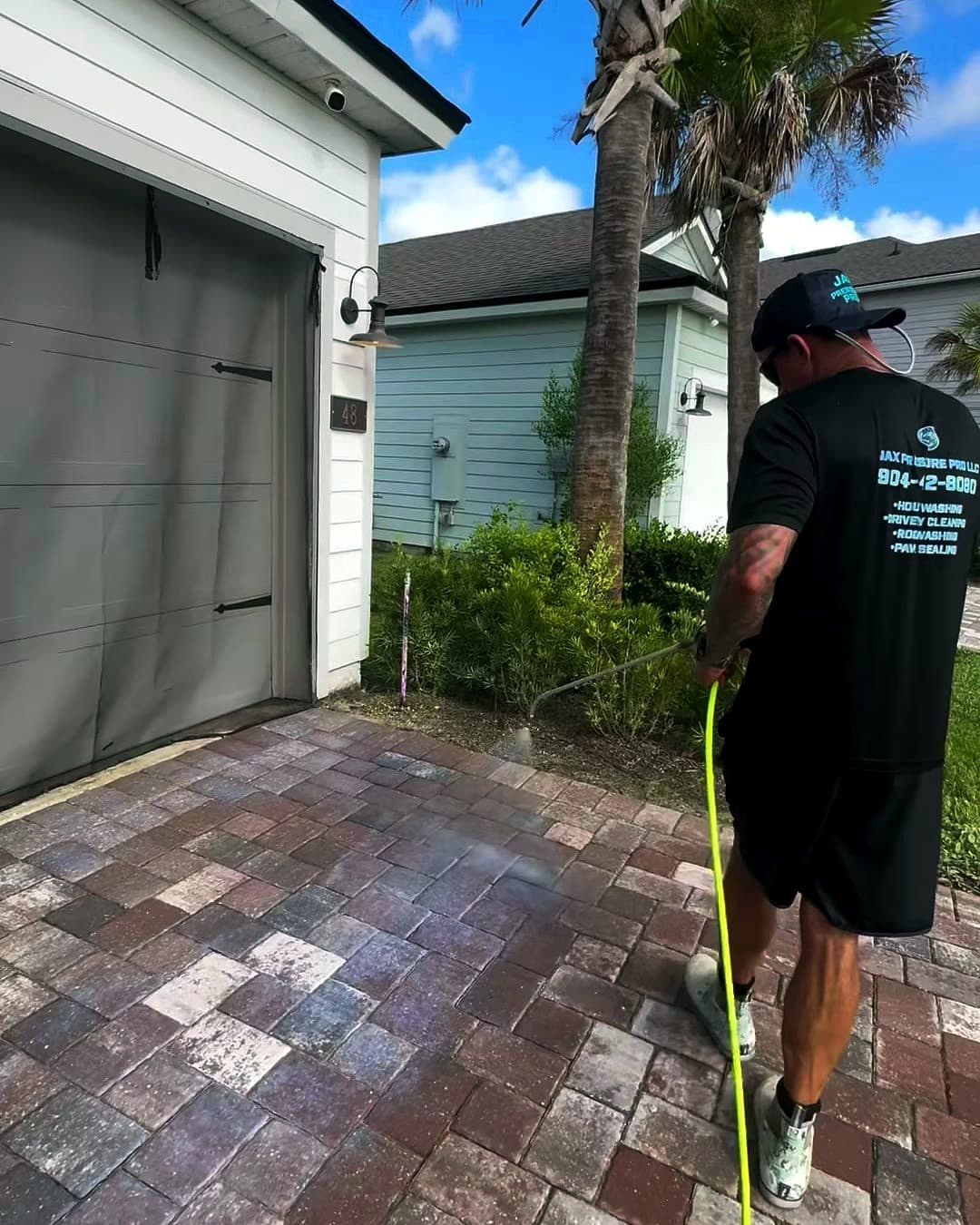
Sun fades paver color. Summer storms and irrigation pull sand out of the joints. Shade and humidity grow algae and mildew on anything that stays damp, which on most St. Johns County lots means the side yards and the north-facing patio.
Sealing locks the sand in, slows the fading and makes the surface much easier to keep clean between visits. Skip it and the joints keep emptying, the pavers start to shift, and at some point the fix is a paver installer pulling and resetting sections. That costs many times what a seal does.
Pool decks and paver patios
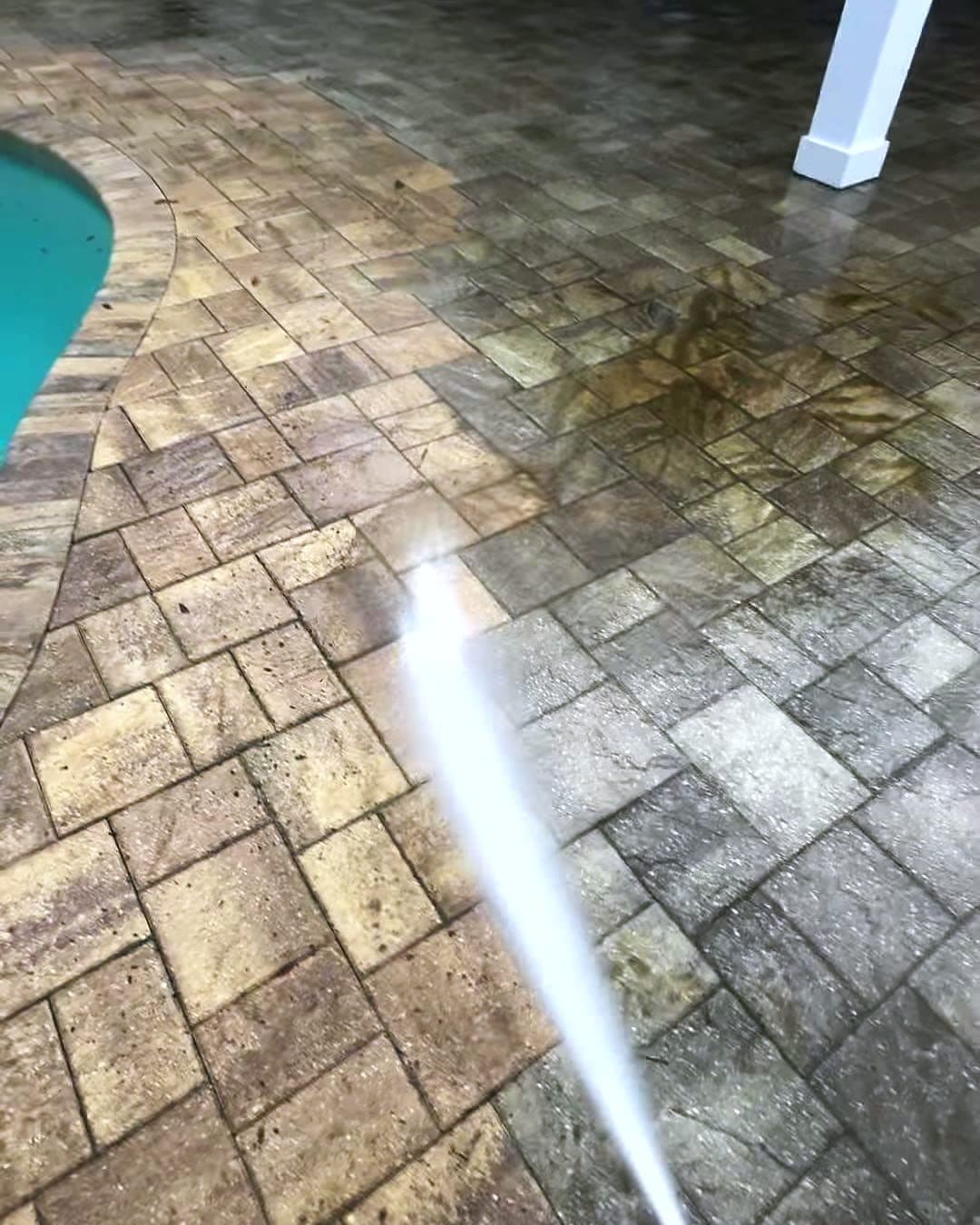
Pool decks take a beating: chlorine, full sun and water that never really dries out. Sealing protects the color, keeps the sand in the joints and keeps algae and weeds from creeping back along the waterline.
If there's a screen enclosure, it gets cleaned at a pressure the screen can handle. Too much pressure tears screens and cracks the mesh, and that repair costs more than the cleaning. The full pool side of the job is on the pool deck cleaning page.
How often to reseal, and when to wait
In Northeast Florida, plan on a quick look at your pavers every year and a reseal about every 2 to 3 years. Driveways that take daily car traffic and pool decks usually land closer to 2.
Brand-new pavers should wait about 60 to 90 days before sealing. That gives trapped moisture time to escape and lets any white mineral haze (efflorescence) come to the surface so it can be cleaned off first instead of being sealed in.
After a wash, pavers usually need 24 to 48 hours to dry before sealing, longer in shade or after rain. That's why cleaning and sealing are often separate days.
What affects your price
Paver cleaning, re-sanding and sealing starts at $1,200, and sealing is backed by a 2-year warranty on the maintenance plan.
Every paver job is quoted on its own because no two are the same. These are the things that move the number:
For typical price ranges by size and what each factor adds, see the paver sealing cost guide. The fastest way to your own quote: text a wide photo of the whole area and a close-up of the joints to (904) 412-8080.
- Square footage, and how many separate areas (driveway, walkway, patio, pool deck)
- How dirty it is: oil spots, rust, heavy algae or years without a cleaning
- How much sand has washed out of the joints
- Whether old sealer is peeling and needs attention first
- The finish you want, a darker wet look or a natural look
- Access: gates, tight side yards and furniture to move
When sealing isn't the right call
Sealing protects pavers that are in good shape. It doesn't fix pavers that are sinking, heaving, cracked or rocking underfoot. Those need an installer to reset them first, and Jordan will tell you that at the quote rather than seal over the problem.
If your pavers went in within the last two months, wait. And if you just want everything clean before guests or a sale, a paver cleaning on its own may be all you need. Plenty of customers pair a paver seal with a house wash so the whole property looks finished at once.
How paver sealing works
Photos or a visit
Text photos of the area for a free quote, or have Jordan come look in person.
Clean and rinse
Surface cleaner across the field, spot treatment on stains, then a full rinse.
Dry and re-sand
The pavers dry out, then joint sand gets swept into every joint and set.
Seal and walk it
Sealer goes down, you walk the job together and you get your before and after photos.
Watch a job
More jobs on YouTube @JaxPressurePro.
Paver Sealing questions
How often should pavers be sealed in St. Augustine?
Every 2 to 3 years for most homes, with a quick look once a year. Driveways and pool decks that see heavy use, sun and water usually need it closer to every 2 years.
Do pavers have to be cleaned before they're sealed?
Yes. Sealer locks in whatever is on the surface, so dirt, algae and stains have to come off first. Sealing over a dirty surface also keeps the sealer from bonding well, and it won't last as long.
How long after pressure washing can pavers be sealed?
Usually 24 to 48 hours, depending on sun, shade, humidity and drainage. Sealing damp pavers traps the moisture and can leave a cloudy finish, so it's worth the wait.
Can new pavers be sealed right away?
It's better to wait about 60 to 90 days. That lets moisture escape and gives any white haze (efflorescence) time to show up so it can be cleaned off before sealing.
Does sealing stop weeds between pavers?
It helps a lot when it's paired with joint sand. The stabilized sand fills the joints and sets up, and the sealer locks it in, so weeds have very little to grow in. Sealer over play sand won't do the same job.
Will sealed pavers look wet or shiny?
That's your choice. Some finishes darken the pavers to a wet look that brings out the color, others keep a natural look. You'll talk through the finish when you get your quote.
Get a free paver sealing estimate
Text a few photos or fill out the form. Most quotes come back without a site visit.
Jax Pressure Pro LLC195 Manistique Ave, St. Augustine, FL 32092(904) 412-8080Open 24 hours. Calls and texts answered 24/7.Directions on Google MapsPrefer to talk? Call or text (904) 412-8080
Pick a time online